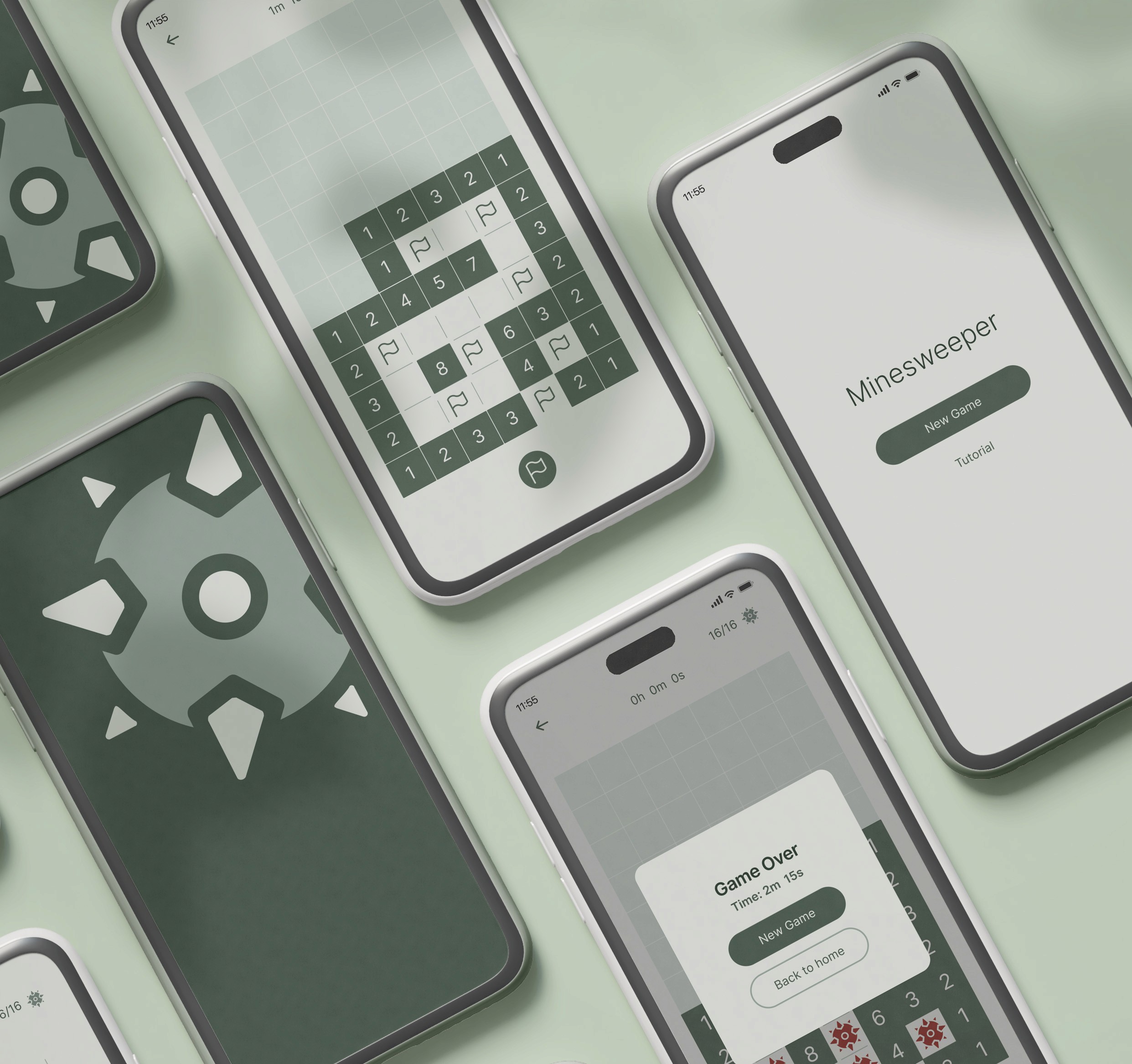
Minesweeper
Mobile devices viewing the Minesweeper prototype may experience lag or limited responsiveness. For optimal performance, please view this prototype on a desktop browser.
The original Minesweeper was built for desktop CRT monitors in the early 1990s. It is a point-and-click logic puzzle where players reveal tiles on a grid using number clues to determine where hidden mines are located without detonating them. To avoid detonation, users place flag markers. Once the gameboard is fully revealed, without detonation, the game is won. With the rise of mobile games, this is a great way to bring a modern take on a classic, recognizable game.
The Revival
Historical nostalgia typically emerges about 20 to 30 years after a decade, placing the 1990s within the current cultural revival window.
“A 2024 survey found the 1990s were the decade people feel most nostalgic for, including over a third of Gen Z, despite many not being born yet.” - Vox
The aesthetic for this decade is getting attention and appreciation. So what does that mean for Minesweeper?
Audience
I was unsure if this would be appreciated in the rapidly growing mobile game industry. After some digging, I found that there is a market for this:
“In 2025, subway surfing, battle royal, and puzzle solving are among the top three mobile game genres by session length.” - SQ Magazine
This made me question, who would enjoy a redesign of a classic puzzle game the most? Amara & Elma Marketing Agency broke down some fascinating 2025 marketing statistics regarding puzzle games:
“Puzzle games are most popular among casual players aged 25–44 (55% of audience).”
“The average session length for puzzle games is 13 minutes, above the mobile gaming average.”
“75% of puzzle game players are women, making it the most female-driven genre.”
This shows a mobile-friendly game would be attractive to 55-75% of current mobile game players. I dialed into my audience with two personas
Lauren
Lauren is a Millennial who works with college students and plays puzzle games to unwind during short breaks or after work. She prefers quick, uninterrupted gameplay that fits into a busy schedule. Frequent ads or animated delays that interrupt the flow of the game frustrate her.
Skye
Skye is a Gen Z working in marketing who enjoys word and logic games in her downtime. Because she works in design-adjacent fields, she quickly notices UI quality and modern design trends. She prefers clean, minimal interfaces and loses interest in apps that feel cluttered or visually outdated.
Visual Design
Upon surface level observation, 90s design aesthetics are making a comeback, the most obvious design choice. However, this made me pause if my audience would actually appreciate a redesign. Upon further research, 90s aesthetic is too niche of a sub-category in graphic design trends (typically only seen in younger Gen Z audiences). Therefore, I’ve decided to go for a cleaner and modern approach to appease my personas.
“Muted, low-saturation color palettes are a growing visual design trend, as designers move away from harsh, high-contrast interfaces toward calmer color systems that reduce eye strain and create more comfortable long-term use.” - Interaction Design Foundation
I narrowed it down to 3 color palettes and presented them to a number of people who fit my personas.
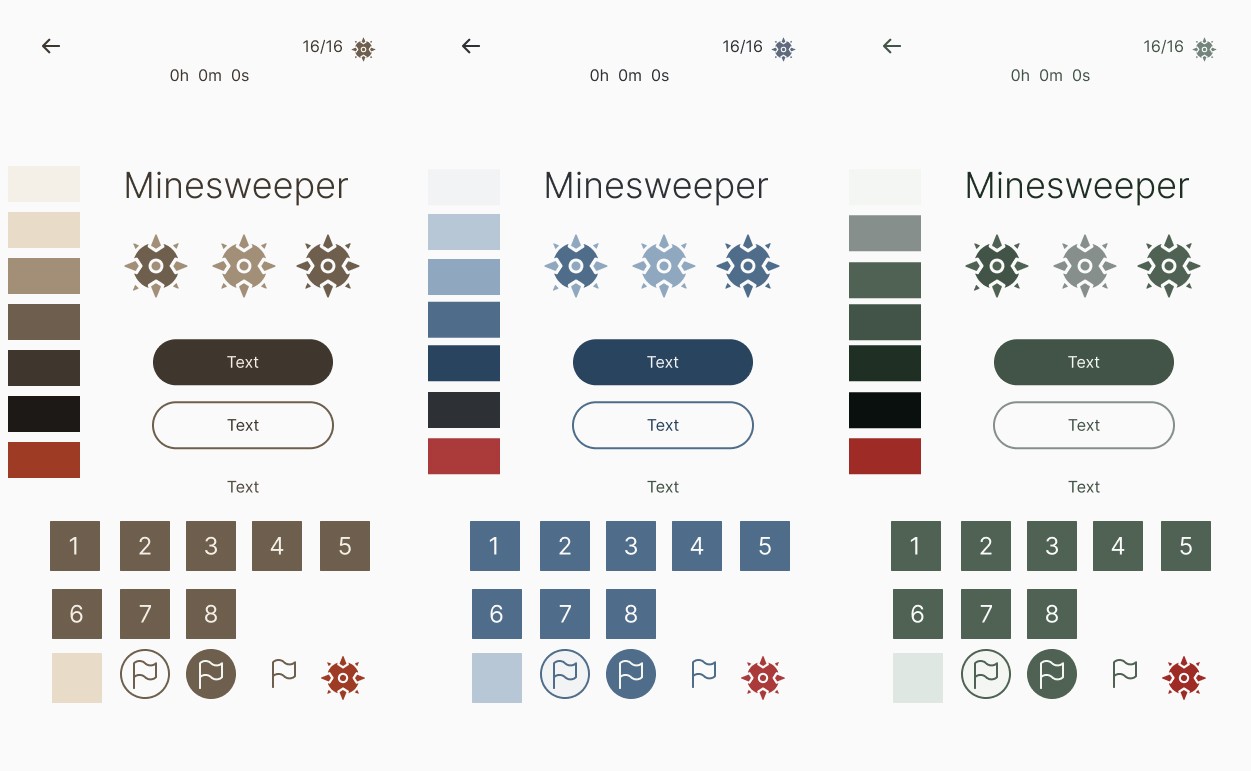
Beige (users called this brown)
Muddy, old, vintage, rustic, dirt
“This is more brown than the beige you were going for. It’s ugly.”
Blue
Polished, cold, serious, masculine
“This is easy on the eyes, but the colors are boring and overused by a lot of other apps.”
Green
Organic, soft, minimal, pleasant,
“This is the most pleasant to stare at out of the three.”
“Reminds me of a meditation app”
The green color palette produced the most positive feedback. With my colors locked in, I decided to explore micro-interactions, a current trend in UX.
“A current UX trend is the use of micro-interactions, small animated responses that provide feedback and make interfaces feel more responsive and intuitive.” - UX Studio Team
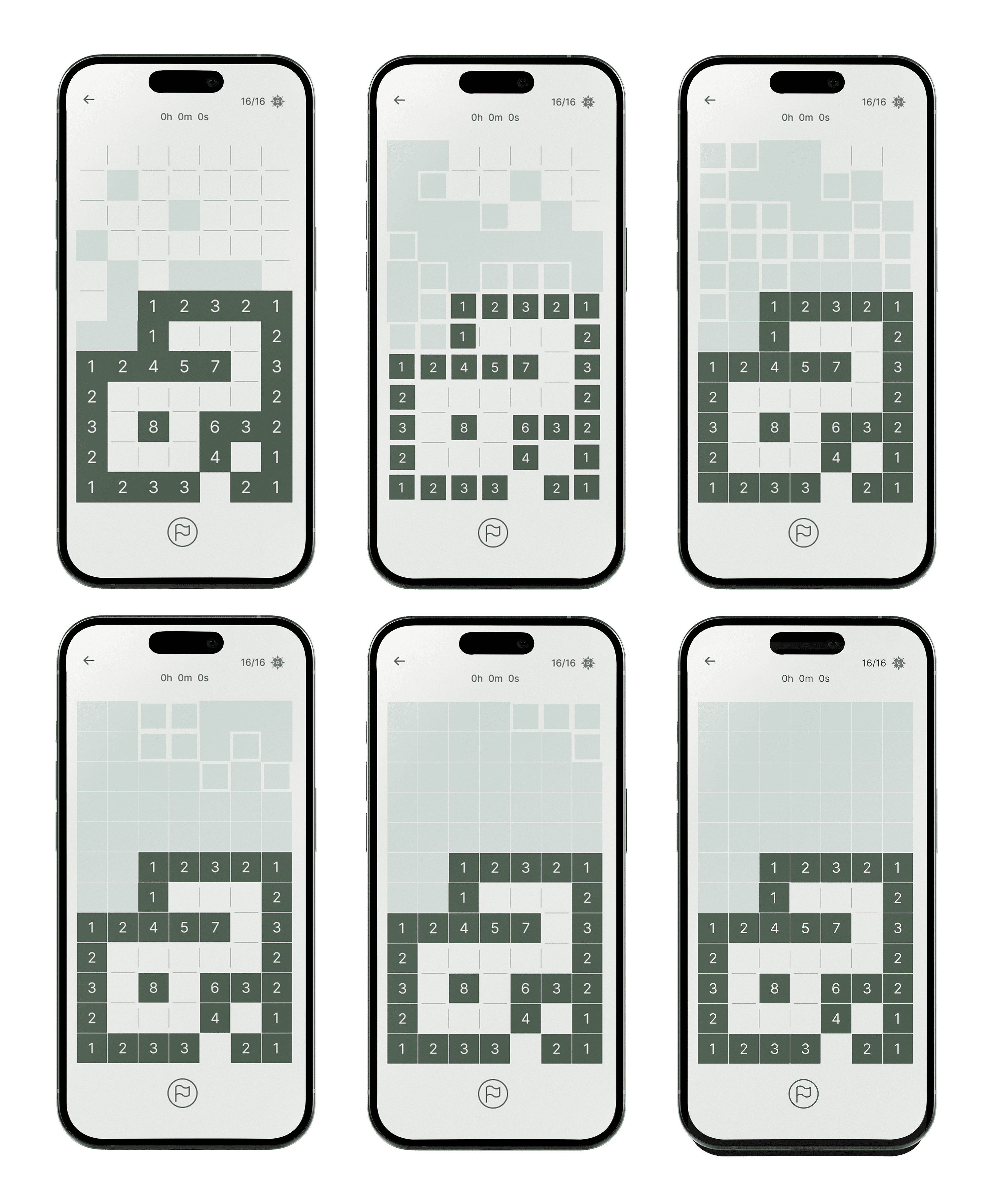
With the emerging trend of micro-interactions, I felt the need to add these into the game to give it life. I have decided to go with subtle pop animations on the number and mine tiles, a cascade animation when neutral sections are revealed, and a top-down motion to simulate placing a flag.
Next Steps
Pull it into Protopie to refine subtle details for a prototype that is truly accurate to gameplay
Usability testing
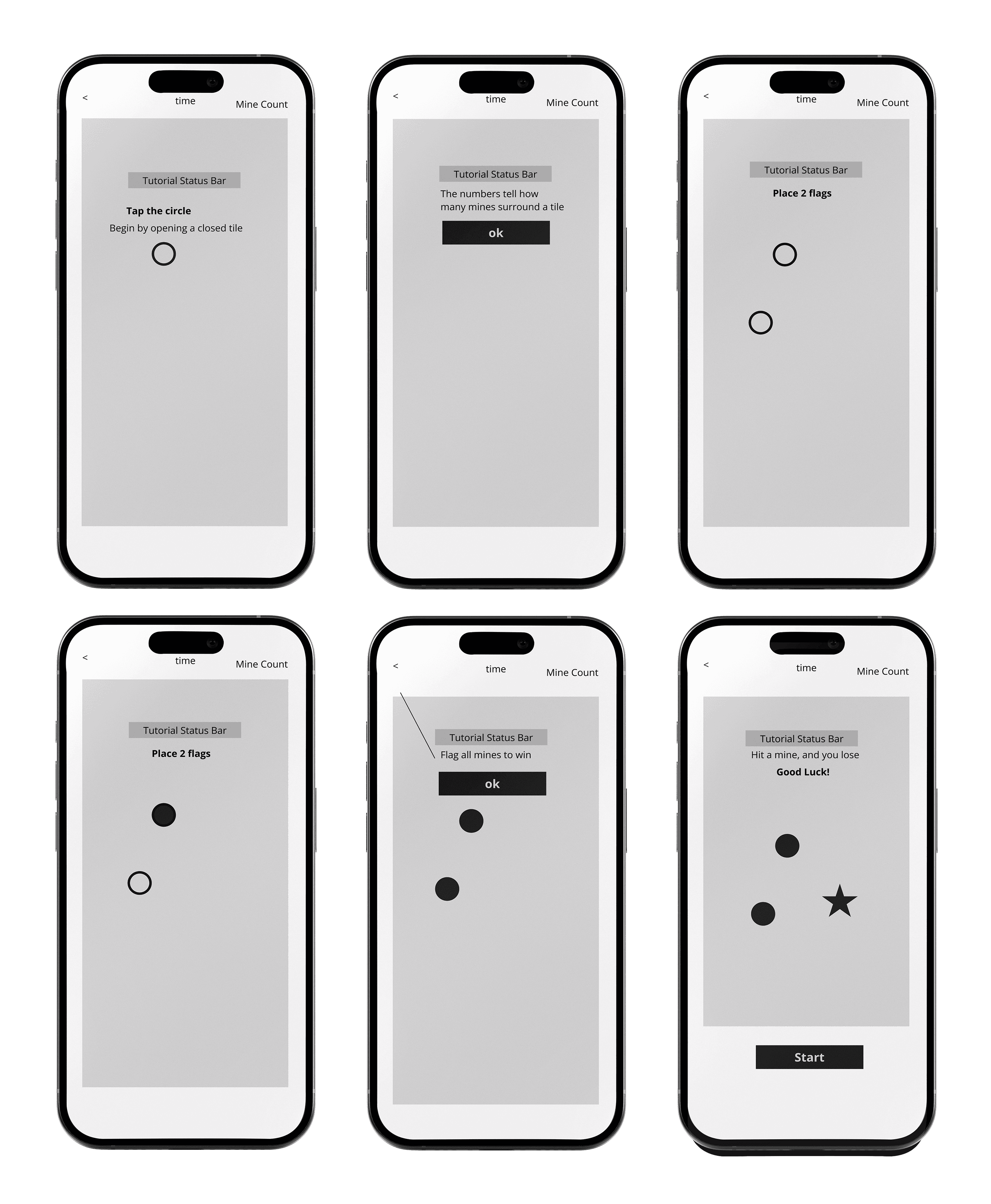
Tutorial creation based on my wireflow below
Conclusion
This redesign explores how a classic desktop puzzle game can evolve into a modern mobile interface. By focusing on calming color pallets and subtle motion, this redesign supports quick gameplay with an appropriate aesthetic for an audience of millennial and early Gen Z puzzle gamers.